Through the Looking Glass of Controversy…
Calvin Klein and American Eagle Reveal How Controversy is Shaped by Culture.
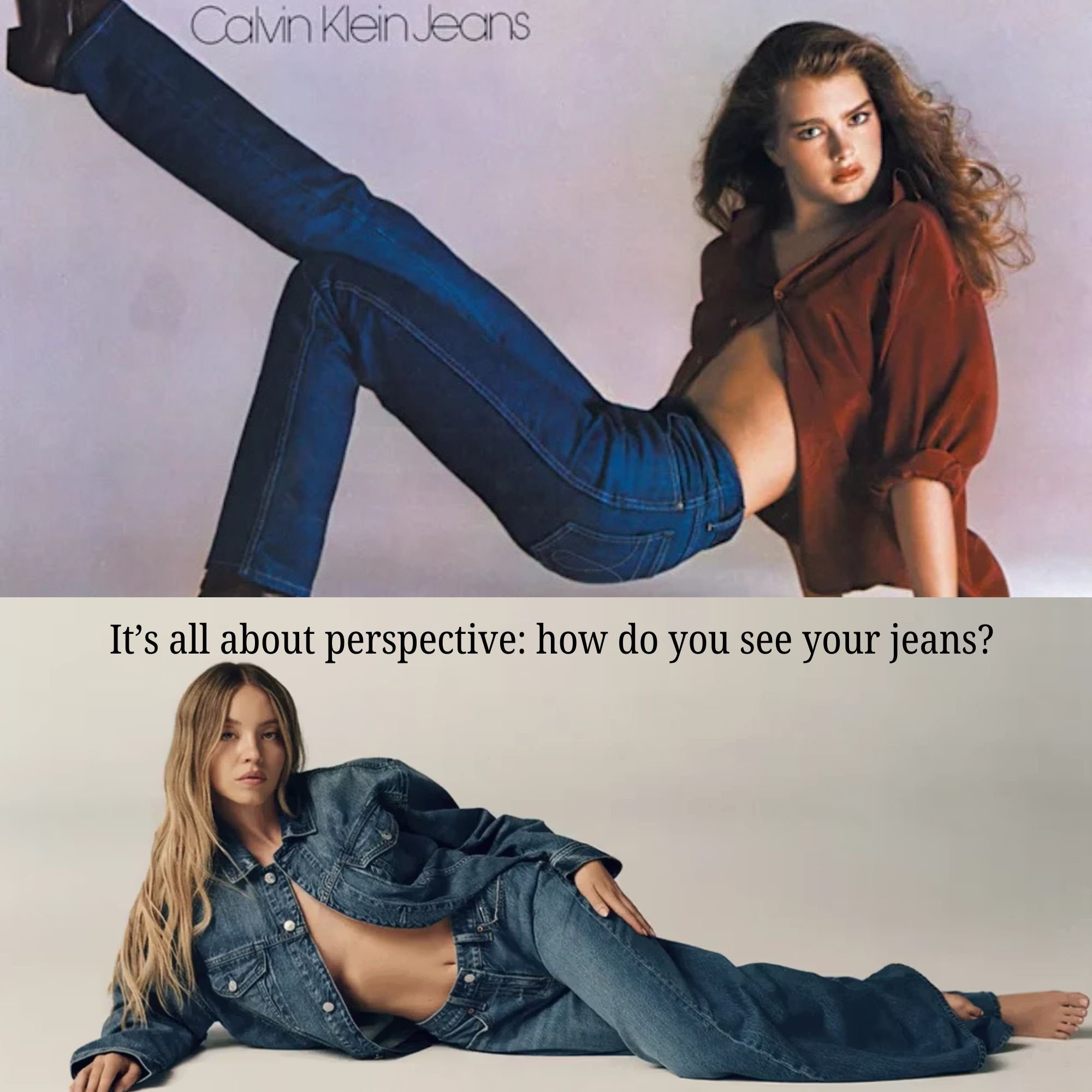
Calvin Klein 1980 compared to American Eagle 2025
If we take two brands from two different decades and have them run the same campaigns, can we expect the exact same reaction from both sets of consumers? History never repeats itself that clearly. In 1980, Calvin Klein released a campaign with young Brooke Shields; the campaign is still noted today as being one of the most controversial denim ads aired. Klein's goal was simple: elevate denim by adding an understated sexual appeal, because sex sells. In 2025, American Eagle followed Calvin Klein's lead, attempting to bring denim back to the center of cultural relevance and public conversation. Both campaigns aimed to elevate denim, using sex appeal and wordplay to intentionally spark conversation, and it worked. Though the conversations that followed stemmed from different aspects of each campaign, for Klein it was the sexual nature, and for American Eagle it was the implications from the discussion of genetics. The difference in backlash isn’t a result of a difference between the campaigns but the shifts in the cultural lens consumers wore as they watched the ads roll across their screens.
To this day, Calvin Klein is known for its provocative, high-fashion identity; in 1980, denim was quite the opposite. Shields' campaign helped Klein bring denim to its level of sophistication and social status. Following her role in Pretty Baby, Brooke Shields was the center of public controversy and praise, making her the perfect person to take denim from casual to catwalk. The decision to cast Shields took denim from affordable, simple, and generic to provocative, expensive, and desirable. Shields' looks combined with an eloquently delivered lecture on genetics and their flow from one generation to the next not only made denim sensual but also sophisticated. American Eagle used the same creative device: sex, intellect, and denim, but their goals differed. As a casual lifestyle denim brand, American Eagle's goal wasn’t to make denim more sophisticated but to bring it back to cultural relevance, which is why Sydney Sweeney was the obvious pick. 2025 was Sweeney’s year; between movies and brand deals, she had become a well-known name across American households. Replicating Calvin Klein’s campaign was an effort to add nostalgia, comfort, and conversationality to denim. However, the same intellectual wordplay that went relatively unnoticed in 1980 wasn’t as easily passed over in 2025. The double entendre of “great jeans” struck a different cord for consumers.
Despite both brands using the same creative formula of sex + intellect + denim, controversy arose from different aspects of the campaigns. To fully understand consumers’ reactions to the advertisements, we need to understand what was crafting the lenses they watched them through. The Calvin Klein controversy was focused on the sexualization of a 15-year-old; looking at other media developments from the 1980s, it almost smacks you in the face as to why. Around the same time, cable TV was introduced, and programs like MTV aired provocative and sexual music videos throughout all hours of the day. The new sexual nature of music videos and celebrity influence was driving consumerism but also pushing the public's comfort level. The more provocative, the more attention from younger audiences and the more opinions from older ones. Klein’s campaign put the explicit sexualization the public was trying to overlook right in their faces in a way they couldn’t ignore, making the dialogue surrounding genetics seemingly disappear into the background of the campaign.
While American Eagle wanted to emulate the same rise in conversation surrounding their brand as Calvin Klein, by 2025 the sexualization of young women in advertisements had become more normalized. Sexualizing a woman to sell clothing was just another marketing tactic most brands already used; it no longer created the same shock factor as in the 1980s. As Americans watched 26-year-old Sydney Sweeney zip her jeans, the campaign component that struck a nerve was her delivery of how genetics are passed down, with the final narrative line of “Sydney Sweeney has great jeans.” During the same summer the campaign aired, the movements for diversity and inclusivity within media were highly visible conversations across all platforms. Sweeney’s age shifted consumers away from the sexual nature of the campaign, leading them to interpret it through a cultural lens built from the prevalent conversations about race, representation, and beauty standards. The dialogue that had gone relatively unnoticed in the 1980s was now colliding with public discussions of race and representation.
When compared together, these campaigns demonstrate consumer interpretation isn't dictated by the literal messaging of a campaign but more so by the cultural points of tension at the time they’re aired.

Controversy Analysis Comparison Tables
The timing of consumer exposure to different campaigns also showed the importance of the media environment in which advertisements are released. The 1980s had a centralized media environment; ad campaigns ran across TV programs, newspapers, magazines, and interviews, leaving a small number of outlets to shape narratives that influenced public opinion. Compare that to 2025’s decentralized media environment, where brands no longer control the path between message and interpretation. Public opinion is collectively narrated by influencers and public/political figures on various social media platforms; podcasts, news outlets, and other everyday consumers. A world where everyone with an internet connection plays a role in interpreting the message of a campaign makes it easy to see how marketing has faced a fundamental shift in who is controlling the narrative between a brand’s message and its consumer interpretation.
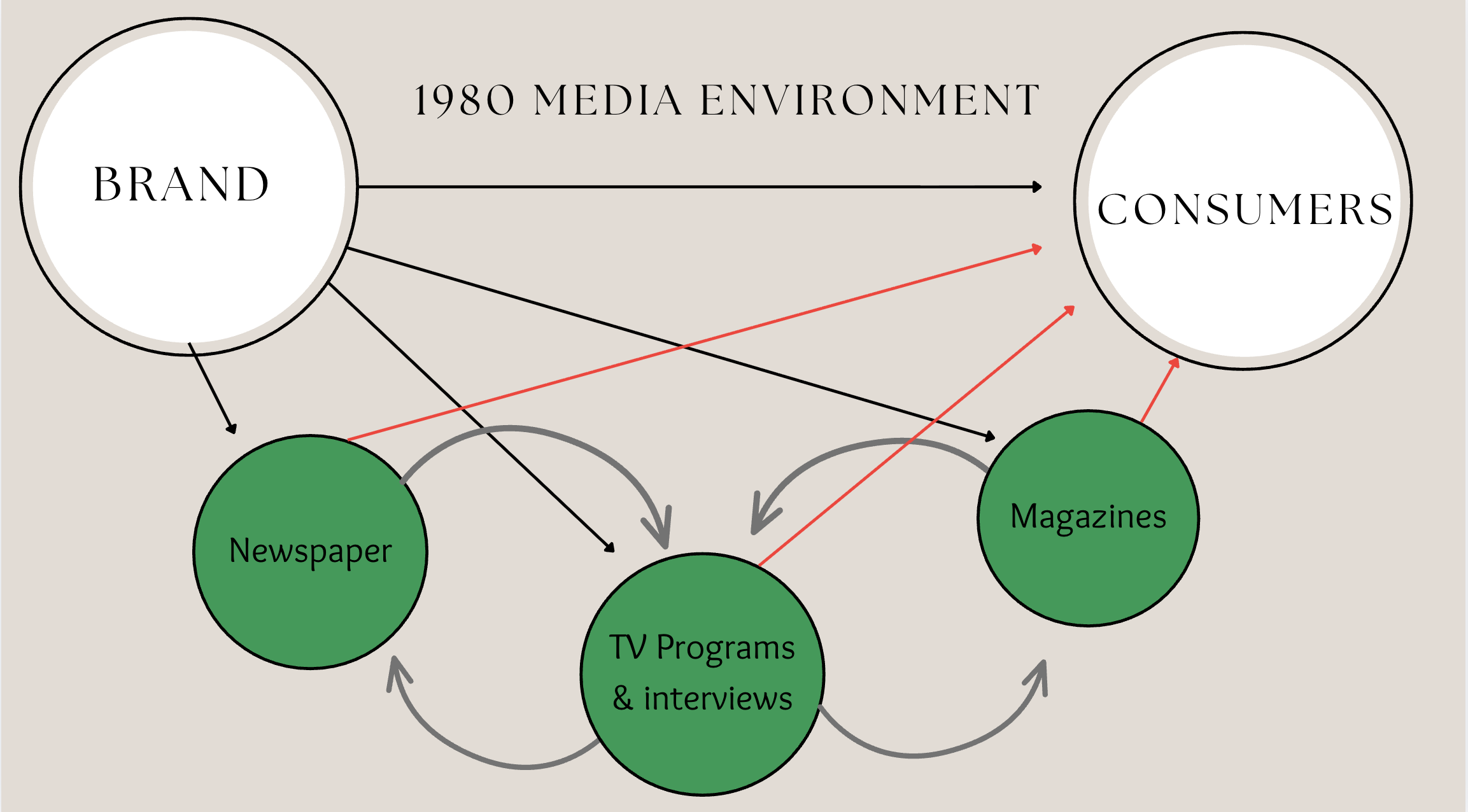
1980s Media Enviornment Web
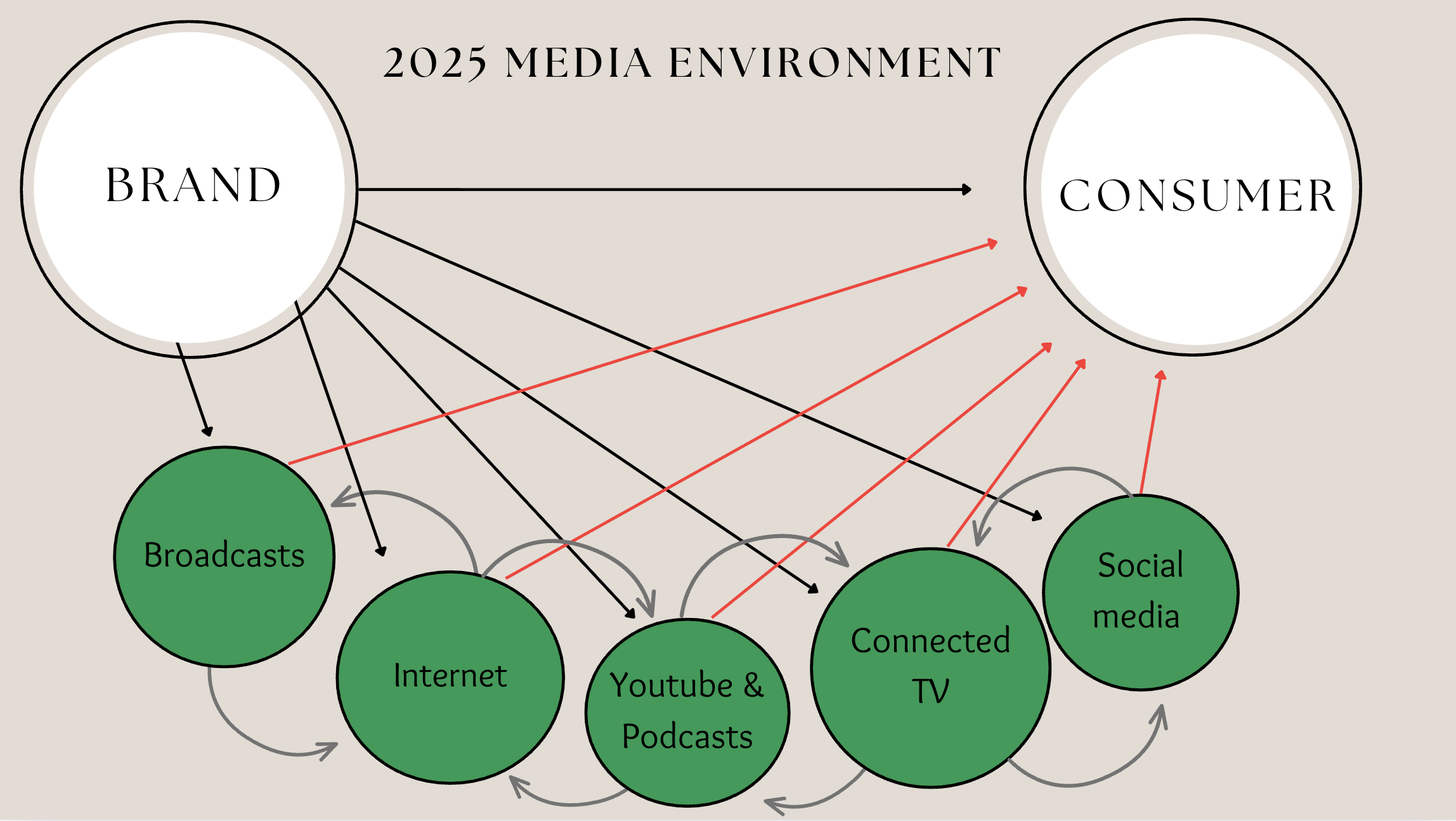
2025 Media Enviornment Web
So if two brands run the same advertisement forty years apart, they can't expect the same reaction; while brands can curate a message, there's no formula to engineer interpretation. Both brands saw the value in creating controversy; it draws attention to a brand in a world where everyone is trying to break through the noise. For both American Eagle and Calvin Klein, intentionally pushing the public boundaries led to a rise in sales, as both products flew off the shelves of their respective stores. However, neither brand could have predicted exactly what aspect of the campaigns consumers would react to. In the time of the Calvin Klein campaign, brands were competing against a small circle of media outlets to control the narrative and intention behind a campaign. In 2025, brands are competing for attention in an oversaturated media environment, while at the same time fighting to control the narrative that follows any attention they gain.
As media technology and platforms continue to develop, brands have to strike a balance between pushing the boundaries of what is comfortable to the public and maintaining a clear brand narrative. Controversy is an extremely effective tool for gaining public attention, but only if brands are prepared to accept that they have no control over what consumers find controversial. Knowing that campaigns are interpreted through a shifting cultural lens, media environment, and polarizing topics that are already being discussed in the current moment, brands should evaluate those conditions against their own messaging, understanding that it could completely alter the meaning the public connects with.
